Which Country Is +36? Codes Behind Unknown Calls
Your phone rang once and stopped. The number starts with +36, or +233, or +252 — a code you have never dialled in your life — and now you're wondering who in that country could possibly want you. The short answer is in the first table below. The longer answer is that the code tells you two useful things: where the call came from, and, more often than not, whether you should bother calling back.
Where the most-searched codes lead
These are the codes people look up most, with the country, its capital and the quickest way to recognise a genuine number from there. Each links to the country's page with the live eFon per-minute rate, in case the caller turns out to be someone you know.
| Code | Country | A real mobile number looks like |
|---|---|---|
| +36 | Hungary (Budapest) | +36 20…, +36 30… or +36 70… |
| +252 | Somalia (Mogadishu) | +252 61…, +252 7… — almost every Somali number is a mobile |
| +251 | Ethiopia (Addis Ababa) | +251 91… — mobiles start with 9 |
| +233 | Ghana (Accra) | +233 24…, +233 55… — mobiles start with 2 or 5 |
| +54 | Argentina (Buenos Aires) | +54 9 11… — mobiles carry a 9 right after the code |
| +86 | China (Beijing) | +86 1… — mobiles are eleven digits starting with 1 |
| +249 | Sudan (Khartoum) | +249 91…, +249 12… |
| +256 | Uganda (Kampala) | +256 7… |
| +971 | United Arab Emirates (Abu Dhabi) | +971 5… — Dubai landlines are +971 4… |
| +370 | Lithuania (Vilnius) | +370 6… |
| +291 | Eritrea (Asmara) | +291 7… |
Not in the list? Every code in the world, sorted by number, is on our country calling codes page — type the digits and the country appears.
How to read the code
An international number has three parts: the country code, the area or network code, and the subscriber number. The country code is the one to three digits right after the +. Codes are allocated so that no complete code is the beginning of another: +1 exists, so nothing else starts with 1; +36 is Hungary, so +360-anything is simply a Hungarian number whose national part begins with 0 — which, as it happens, doesn't exist. That rule is why your phone can always tell where the code ends.
The + itself is not a digit. It stands for the international exit code of whatever country you're in — 00 across Europe and most of the world, 011 in the USA and Canada — so a number written as 0036… on a call log and one written as +36… are the same thing. If the number on your screen begins with 00 rather than +, mentally drop the two zeros and read the next digits as the country code. Our guide to dialling international numbers takes the whole format apart if you want the detail.
The codes that look like something else
A few codes are easy to misread, and scammers know it:
- +1 is not only the USA. Canada and most of the Caribbean share it. A number starting
+1 876is Jamaica,+1 268Antigua,+1 473Grenada — and calls from those three-digit groups are classic one-ring bait, because they look like a US call and cost a fortune to return. - +7 is Russia and Kazakhstan. Kazakh numbers start
+7 6or+7 7; Russian mobiles start+7 9. - +44 reaches beyond Great Britain to Jersey, Guernsey and the Isle of Man — the latter's mobiles start
+44 7624. - +36 and +63 are not neighbours. One is Hungary, the other the Philippines. The same goes for
+233(Ghana) and+223(Mali),+251(Ethiopia) and+215, which isn't assigned at all. When the digits feel almost familiar, that is exactly when to check.
One ring, then silence: the wangiri scam
Here is why the call stopped after a single ring. Wangiri is Japanese for "one ring and cut", and the scheme is exactly that: an automated system dials thousands of numbers abroad, lets each ring once, and hangs up. The number it leaves behind is a premium-rate line. Everyone who calls back out of curiosity pays a steep per-minute charge — often with a recorded voice stalling to keep them on the line — and the scammer collects a share.
The pattern is easy to spot once you know it:
- You don't know the number and you don't know anyone in that country.
- It rang once or twice, at an odd hour, and left no message.
- The same code keeps turning up — these campaigns run in waves, which is why searches for a particular code spike for a few weeks and then move on to the next one.
What to do: nothing. Don't call back, don't text, and don't answer a second attempt. Search the full number online — if it's part of a campaign, other people will have reported it. Block it, and if you did call back, check your next bill and tell your operator; many will reverse the charge for a first offence.
When it really is someone you know
Of course, sometimes the +233 really is your cousin in Accra, the +291 is your mother in Asmara, and the +36 is the hotel in Budapest confirming your booking. The code checks out, the number matches a contact or a recent message, and you want to call back. That's the moment the price matters: the same international call that is a scammer's profit is, on most mobile plans, an eye-watering per-minute rate for you too.
This is what eFon is for. The app connects your call over the internet and delivers it as an ordinary phone call to the mobile or landline at the other end — the person you're calling needs no app and no internet, just a phone that rings. You pay one clear per-minute rate with no connection fee, up to 90% less than dialling directly on a mobile-operator plan, and the price is the same whichever country you're calling from. Save the number in full international format (+233 24 123 4567, not 024…), and the call is one tap.
Every destination has its own page with the current rate: start from the all destinations list, or look the code up on the country calling codes page and follow the link in its row.
Quick answers
Is +36 a scam number? No — +36 is simply Hungary's country code, used by millions of legitimate numbers. A one-ring call from +36 that you weren't expecting is the suspicious part, not the code itself.
Can I tell the country from the first digit alone? Only roughly: codes starting with 1 are North America and the Caribbean, 2 is mostly Africa, 3 and 4 Europe, 5 Latin America, 6 Oceania and South-East Asia, 7 Russia and Kazakhstan, 8 East Asia, 9 South and West Asia. For the exact country you need the full code — one to three digits.
Does a + number cost more to call back than a 00 number? They are the same number written two ways; the price depends only on the destination and on how you call. From a mobile plan it is the operator's international rate; with eFon it is the per-minute price on the country's page.
Why am I getting calls from a code I've never heard of? Because the number-generating software behind one-ring scams doesn't pick targets — it dials ranges. Receiving one says nothing about you; it just means your number is within a range that got dialled this week.
 Hungary — calls from 0.01 €/min
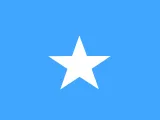 Somalia — calls from 0.21 €/min
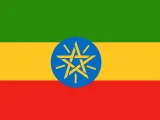 Ethiopia — calls from 0.18 €/min
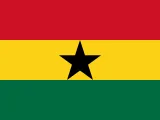 Ghana — calls from 0.16 €/min
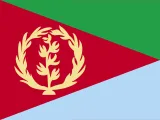 Eritrea — calls from 0.18 €/min